Leak Detection Edgewood Park
Most leak detection Edgewood Park calls involve the older homes near Whipple Avenue, beside Mount Carmel — houses whose plumbing belongs to an earlier era of the city and has been working ever since. Galvanized-era supply lines, cast-iron drains, decades of small repairs: the leaks here are rarely mysterious once someone actually tests the system, but they are very good at hiding until then. Leak Detection Pros tests branch by branch — pressure, acoustics, thermal, camera — and reports exactly which line is failing and what condition the rest are in.
Older Homes Beside Mount Carmel
Edgewood Park is one of the city's established older neighborhoods, and its plumbing follows the materials of its generation — steel and iron that have given long service and are now showing their age.
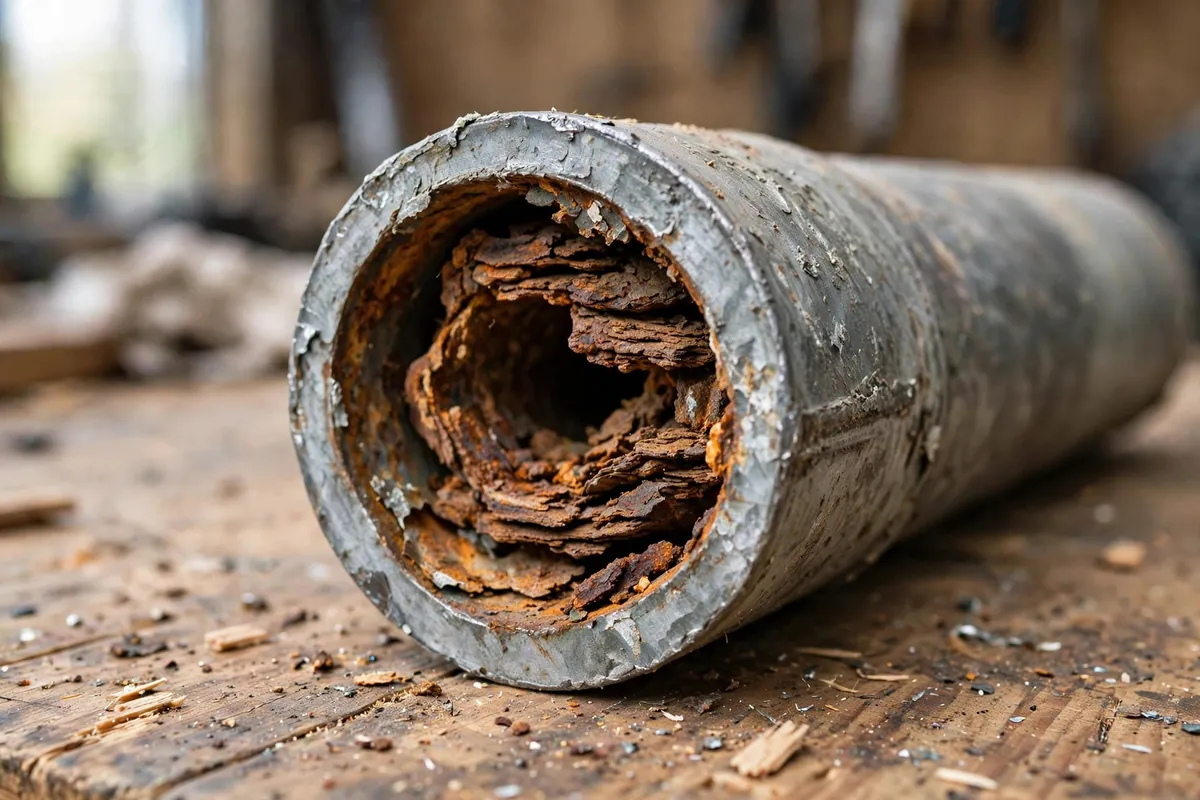
Talk about homes of this era on the Peninsula and the materials are predictable: galvanized steel for supply, cast iron for drainage, with copper worked in wherever a kitchen or bath was modernized along the way. Galvanized pipe has a particular way of dying — it rusts from the inside, so the outside of the pipe can look respectable while the bore narrows to a fraction of its size. Pressure fades, water discolors after a trip away, and eventually the thinned wall opens at a thread. Cast iron ages differently: it scales, cracks along its length, and gives roots a way in at the joints.
That is why an Edgewood Park visit is as much an audit as a hunt. Yes, we find the leak you called about — but the pressure test and the branch-by-branch isolation also tell you how much life the rest of the system has. For a homeowner weighing a repair against a repipe, that is the information that actually matters, and it comes in a written report with ranges attached to each option. No invented urgency, no bundle: find it, prove it, price it.
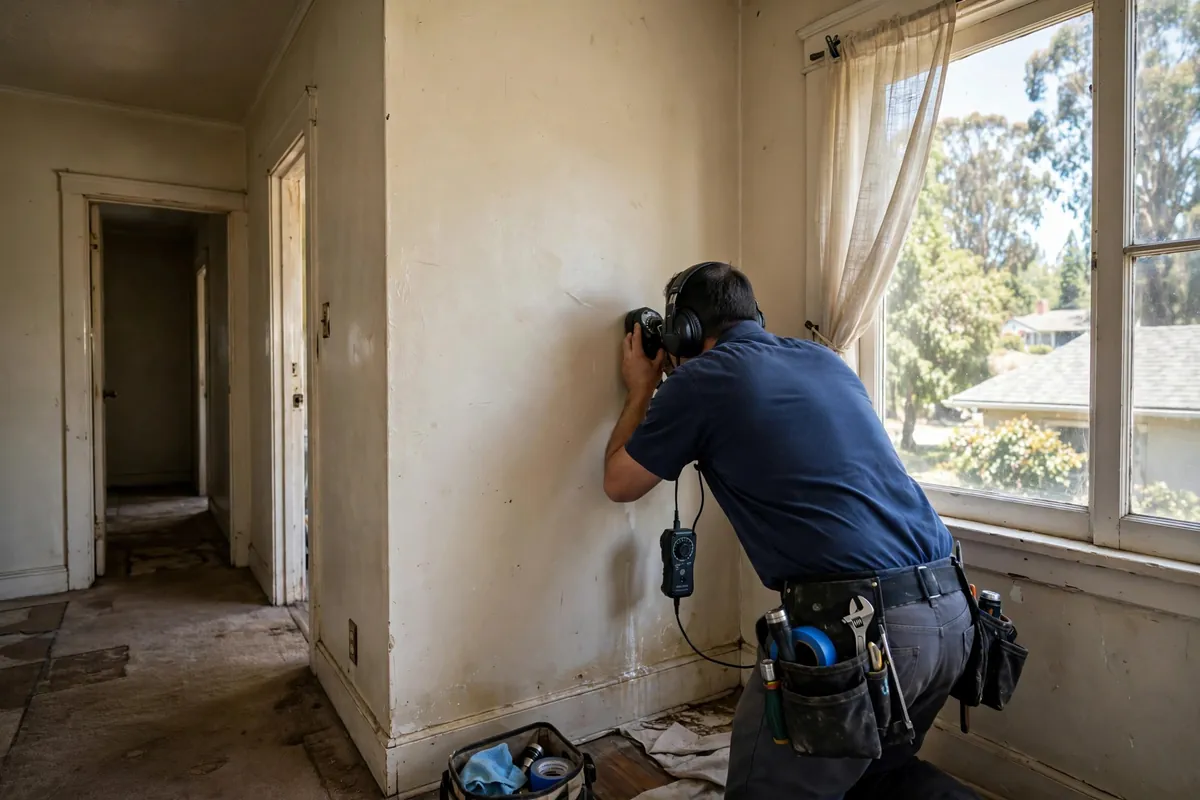
Era Plumbing, Tested Honestly
Old pipe is not automatically bad pipe — plenty of these lines test sound. We isolate and pressure test each branch so the recommendation follows the evidence: repair what is failing, leave what is holding, and plan for what is genuinely near the end.
Leak Problems We See Most in Edgewood Park
The neighborhood pattern is end-of-era plumbing: thinning supply lines, tired drains and symptoms that arrive years after the cause.
- Galvanized pinholes and thread failures — internal rust opening the thinnest points of the supply system
- Fading water pressure — scaled pipe narrowing house-wide, the warning sign that precedes the leak
- Cast-iron drain cracks and root joints — slow drains, odors and backups that clearing only postpones
- Underfloor drips — supply and drain leaks wetting the crawl space and subfloor unnoticed
- Leaks at remodel transitions — copper additions tied into steel originals, failing at the fitting
- Yard service line leaks — the buried meter run losing water with no indoor symptom at all
The trap in an older home is fixing the drip and missing the decade. Each repair on this list is quoted on its own merits — but you will always know, from the test results, whether it is a one-off or a pattern.
One clue in these homes costs nothing to check and tells you a great deal: the first-draw test. After the house has sat quiet overnight — or after you return from a few days away — run a cold tap and watch the first seconds. Water that comes out discolored and then clears has been sitting against corroding pipe wall; the rust it carries is your galvanized system's own report on itself. Pair that with a meter reading and you have the two honest numbers an Edgewood Park diagnosis is built on: how much water the system is losing, and how tired the system that is losing it has become.
Services We Run in Edgewood Park
The three services this neighborhood's housing stock calls for:
Water Leak Detection
Supply, wall and yard-line leaks pinpointed with pressure testing, acoustics and thermal imaging.
Learn more →Repiping
When test results show a system at end of life, replacement priced in ranges — PEX or copper — beats serial repairs.
Learn more →Crawl Space Leak Detection
Underfloor supply and drain leaks in raised-foundation homes, caught before framing and subfloor suffer.
Learn more →Edgewood Park ZIP Code: 94062
Edgewood Park addresses sit in ZIP code 94062, shared with Emerald Hills and the upper end of Farm Hill — all covered by our crew every day.
See the full detection process on our Redwood City leak detection homepage, or browse the neighboring areas:
Reading a Pressure Test: What the Gauge Is Telling You
The pressure gauge is the least dramatic instrument we carry and the one that decides the most. Here is how to read what it says about your pipes.
The test itself is simple to describe. A branch of the plumbing is isolated at its shut-offs, brought up to pressure, and watched. Sound pipe holds the needle still. A branch with a pinhole, a weeping joint or a failing valve cannot — the needle falls, and how it falls is information. A fast drop means an open failure, the kind usually already leaving evidence somewhere. A slow, patient decline is the signature of the leaks this neighborhood specializes in: small, old, and easy to miss with every tool except this one.
Run branch by branch, the test becomes an audit of the whole system, and that is the result Edgewood Park homeowners actually need. One branch failing while three hold is a repair conversation. Every branch declining at its own rate is a different conversation — not a scare tactic, a measurement. Galvanized pipe installed in the same year corrodes on roughly the same schedule, and the gauge can hear that schedule in a way no visual inspection can, because the corrosion that matters is on the inside of the pipe, where no camera goes.
The test also protects you from the opposite mistake. Plenty of original pipe in these homes still holds full pressure without losing a pound, and pipe like that earns the right to be left alone whatever its age. The report records each branch's result separately, so the recommendation — repair this, watch that, plan for the other — is traceable to a reading rather than to a birthdate. Old is a suspicion. The needle is evidence.
That evidence is what the repair-or-repipe decision should be made of. Repeated repairs on a system the gauge has already pronounced finished will out-cost one replacement over five to ten years; a single repair on a system the gauge calls sound is money well spent and the end of the story. Our job is to hand you the readings. The arithmetic, and the decision, stay yours.
Bring us a symptom — a slow drain, a fading tap, a bill that crept — and the visit turns it into those readings for every branch in the house, not just the one that complained.
Edgewood Park Leak Questions
What kind of plumbing do Edgewood Park homes usually have?
Speaking in era terms, homes of this neighborhood's generation on the Peninsula were typically plumbed with galvanized steel supply lines and cast-iron drains, with copper appearing in later remodels. Galvanized pipe corrodes from the inside over decades, so by now original lines are commonly at end of life. A detection visit maps what is actually in your walls and under your floors rather than assuming from the build year.
Why do my drains keep slowing down?
In older lines, the usual causes are scale and corrosion narrowing the pipe from inside, roots entering at a joint, or a section that has sagged and started holding water and debris. Clearing helps once; if the slowdown keeps returning, a camera inspection shows which of the three you have — because each one has a different fix and a different price.
How can I tell if I have a leak before I call?
Use the meter. Turn off every faucet, toilet and appliance and watch the low-flow indicator — movement means water is escaping somewhere. You can also read the meter, avoid using water for two hours, and read it again. Redwood City's My Water portal shows the same story hour by hour, which helps separate a continuous leak from normal household use.
When is repiping the honest recommendation?
When the evidence says the system, not a single pipe, is done: leaks in more than one location, rusty or discolored water, pressure falling across the whole house, and original galvanized lines throughout. At that point, repeated repairs usually cost more over five to ten years than replacing the lines once. We present both paths with their ranges and let the test results make the case.
What does a detection visit cost in Edgewood Park?
A basic leak inspection typically runs $100–$300, electronic acoustic detection $300–$800, and slab or underground locating $500–$1,200, depending on the home and how hidden the leak is. You get the range before work begins, and detection is always quoted separately — the repair decision comes after the location is proven, never bundled into it.
How much does a full repipe cost in a home like mine?
A full repipe typically runs $1,500–$15,000 depending on the size of the home and the material. For a home of roughly 2,000 square feet, PEX usually lands around $2,000–$4,000 and copper around $8,000–$16,000. Raised-foundation homes like most of Edgewood Park sit at the friendlier end of those ranges because the lines are reachable from the crawl space. We price your home from its test results, not from the table — but the table is the right order of magnitude to plan around.
PEX or copper — which belongs in an older home?
Both are proven, and the honest answer depends on the house. PEX is flexible, needs fewer joints, installs faster and costs less; it is often the simpler run through a crawl space. Copper is rigid, has the longest track record, and costs more in both material and labor. In an older home we lay both options out with their ranges and the reasoning — layout, budget and how long you plan to stay — and the choice stays yours.
If only one branch fails the pressure test, do I have to repipe everything?
No. A sectional replacement of the failed branch is a legitimate repair when the rest of the system tests sound — pipe does not all die on the same day, even pipe installed on the same day. The audit exists precisely to tell you which situation you are in: one tired branch in a sound system, or the first failure of a system that is finishing together. We would rather replace six honest feet than sell you a houseful you do not need yet.
Find the Leak. Audit the System. Decide Once.
In an older Edgewood Park home, the smart visit answers two questions: where is the water escaping, and how much life is left in the rest of the plumbing? We answer both, in writing, with ranges — then the decision is yours.
Call (650) 632-9185 Request a Quote