Commercial Leak Detection Redwood City, CA
A leak in a home costs water and drywall. A leak in a business costs water, drywall, downtime and tenants. Leak Detection Pros delivers the commercial leak detection Redwood City, CA property owners and managers need: the leak pinpointed without shutting the building down, and the findings documented in a written report built for the insurance conversation that follows.
Leaks Cost Businesses Differently
A commercial leak is a bigger problem than a residential one for a simple reason: the water runs through more building, past more tenants, for longer before anyone notices. A supply line weeping inside a wall cavity in a Downtown office or a Broadway retail space damages the unit it is in, the unit below it, and the relationship with both tenants — while the meter keeps billing the owner for every gallon.
Commercial buildings hide leaks better than houses do. Drop ceilings conceal the early stains. Slab-on-grade retail floors hide under-slab leaks until the flooring itself fails. In multi-unit buildings, one unit's leak becomes the downstairs neighbor's ceiling stain, and the first argument is never about the water — it is about whose pipe it is. That is why commercial work starts with evidence: which branch, which unit group, which exact spot. Once the location is marked and documented, the repair argument and the insurance argument both get much shorter.
The signs that bring commercial clients to us:
- The building's water bill creeping up quarter after quarter with no change in occupancy or use
- A meter that never fully stops — in a commercial building, something is always running, and that camouflage protects leaks for years
- Ceiling stains or bubbling paint in a lower unit beneath a bathroom, kitchen or mechanical room
- Musty odor in one office or storage area that cleaning never quite removes
- Warm or lifting flooring over a slab in a restaurant kitchen, restroom or retail space
- Repeated drain backups suggesting a compromised sewer lateral — a camera question, not a snake question
Scheduled Around Your Hours
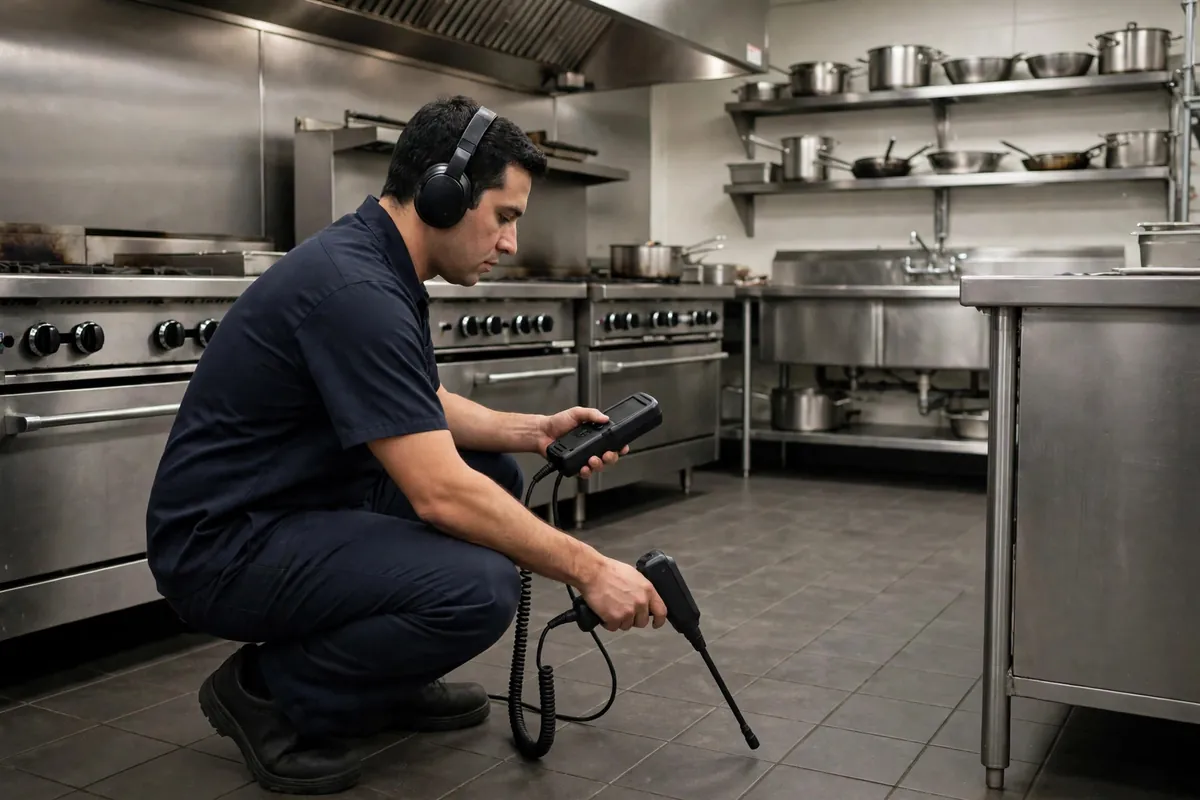
Detection is mostly listening, testing and tracing — quiet work that does not require shutting the building down. We run commercial visits in the hours that suit the property: before a restaurant opens, after an office empties, between tenant turnovers. The noisy, open-the-floor part — if it is needed at all — comes later, planned, targeted at one marked spot instead of an exploratory tear-out during business hours.
How Commercial Detection Works
The process scales up from our residential work — isolate, test, pinpoint, document — with one addition commercial clients care about: every step produces a record. For occupied buildings we also agree the access plan with your on-site contact before we arrive, so tenants, staff and customers know exactly when we will be working in a ceiling, a restroom or a mechanical room — and when we will be out of the way again.
Scope the Building
Meters, branches and unit groups are mapped first, so testing starts at the building level instead of wandering unit to unit.
Isolate & Pressure Test
Branches are shut down in sequence and pressure-tested to identify which section of the system is losing water.
Acoustic & Thermal Pinpoint
Listening equipment and infrared imaging narrow the leak to a marked location — through slab, walls or ceiling cavities.
Camera Where It Counts
For drain and sewer questions, a camera inspection shows the inside of the line on screen — root intrusion, breaks and bellied sections, recorded.
Mark & Photograph
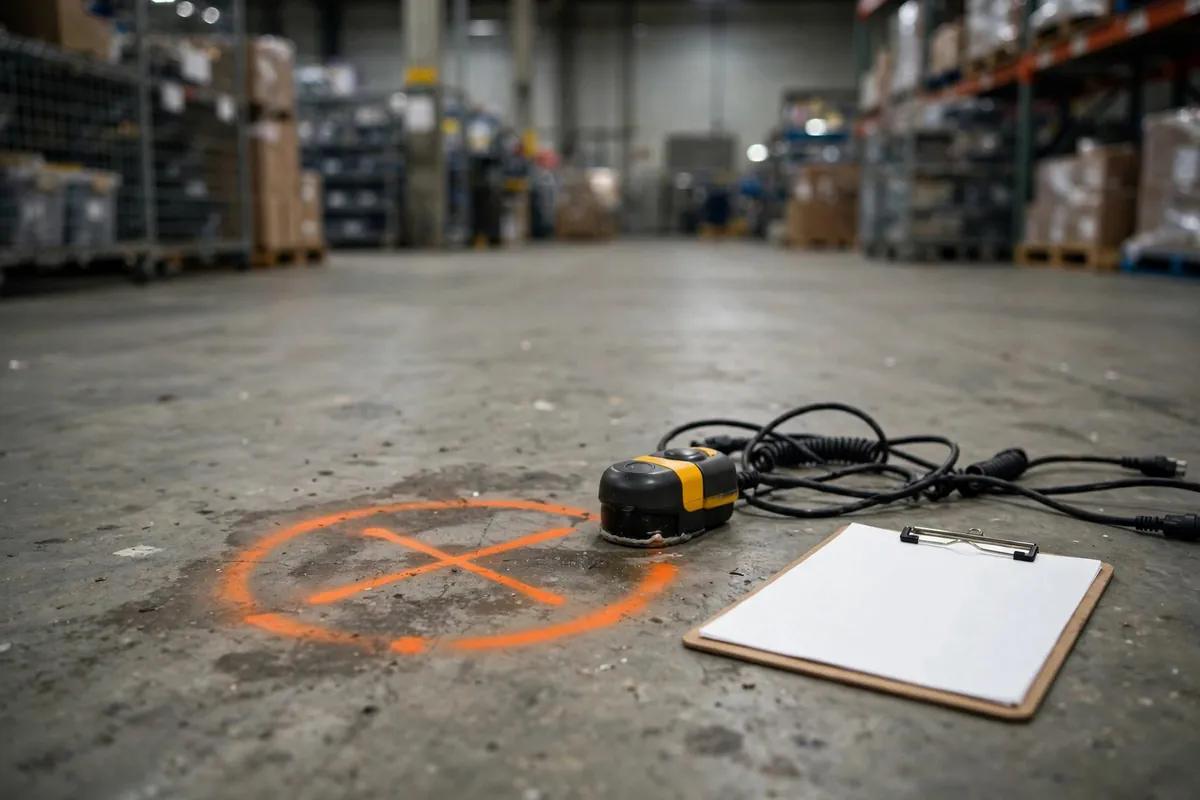
The location is marked on the surface and photographed in context — the evidence your repair contractor and your adjuster both work from.
Written Report
You receive a written summary: where the leak is, what caused it, what damage was observed, and the repair options with ranges.
The Written Report Your Insurer Actually Wants
Most property owners learn how leak insurance works the hard way, mid-claim: a standard commercial or homeowners policy typically treats the damage the water caused — and the cost of tearing out and restoring access to reach the pipe — very differently from the failed pipe itself, which is often excluded, and slow, gradual leaks are the most common reason claims get denied. The argument is won or lost on documentation.
That is why every commercial detection visit ends with a written report: the leak's marked location, photographs, the diagnosed cause, and the resulting damage, described precisely. It is the same discipline behind our residential leak detection in Redwood City, applied where the paperwork matters most. Only one competitor in the wider Bay Area market even gestures at an insurance-ready report — and they come in from Hayward. For a Redwood City property, this report is a local service: if a sewer camera inspection or a slab leak pinpoint is part of the picture, the findings roll into the same document your adjuster reads once, not three partial stories from three visits.
What Commercial Detection Costs
| Service | Typical Range |
|---|---|
| Basic leak inspection | $100 – $300 |
| Electronic (acoustic) detection | $300 – $800 |
| Slab / underground locating | $500 – $1,200 |
| Sewer camera inspection | $271 – $1,725 |
Larger and multi-meter properties are scoped on a quick call and quoted as a range in writing. Property managers running several Redwood City locations can schedule building by building — each visit closes with its own report, so your records stay clean per property.
Related Services
Commercial leaks usually need one of these next:
Sewer Leak Detection
Camera inspection that shows you the inside of the line on screen — the evidence behind every commercial drain decision.
Learn more →Slab Leak Detection
Slab-on-grade retail and restaurant floors hide leaks until the flooring fails. We pinpoint them before that day.
Learn more →Emergency Leak Repair
An active leak in an occupied building is a same-day problem. Shut it down, document it, then plan the repair.
Learn more →Commercial Leak Questions Owners & Managers Ask Us
Can you do the detection work outside our business hours?
Yes. Commercial detection is scheduled around your operation — early mornings, evenings or the hours your restaurant or office is closed — because most of the work is listening and testing, not demolition. Pinpointing first also means any repair opening is small and planned, rather than an emergency tear-out during service.
Do you provide documentation for our insurance claim?
Yes. Every commercial visit ends with a written report: the leak's marked location, photographs, the cause as diagnosed, and the damage observed. Insurers typically treat damage and access costs differently from the failed pipe itself, and a precise report is what lets your adjuster separate the two — it is the document most property owners wish they had.
We manage several units. Can you test the whole building?
Yes. Multi-unit work starts at the meter and the building's branches — we isolate unit groups and common lines to find which section is losing water before testing individual units. That sequence keeps the visit efficient and gives property managers a defensible record for allocating the repair cost.
How is commercial leak detection priced?
On the same published ranges as our residential detection work: a basic inspection typically runs $100–$300, electronic detection $300–$800, slab or underground locating $500–$1,200, and sewer camera inspection $271–$1,725. Larger or multi-meter properties are quoted as a range in writing after a quick scoping call — never an open-ended hourly meter.
What kinds of properties do you cover?
Offices, restaurants and food service, retail spaces, warehouses and multi-unit residential buildings across Redwood City, CA. The plumbing differs — commercial kitchens, slab-on-grade retail, stacked multi-unit supply lines — but the detection process is the same: isolate, test, pinpoint, document.
How fast can you respond to an active commercial leak?
Active leaks are treated as emergencies — call us and the first job is stopping the water, whether that is a shutoff at the branch or the building main. Once the property is safe, detection and documentation follow, so both the repair and any insurance claim start from facts instead of guesses.
We lease our space. Who usually pays for a leak — the tenant or the landlord?
The lease decides first, so start there. In California, keeping a building's plumbing in working order generally falls to the property owner unless the tenant caused the damage or the lease assigns that maintenance to the tenant, and commercial leases vary a lot more than residential ones. What both sides need either way is the same thing: a located leak and a written report, so the conversation is about a documented problem rather than two opinions.
What does a hidden leak cost a business besides the water bill?
Usually more than the water. A slow leak in a wall or under a slab can mean mold remediation, damaged inventory or equipment, and flooring and drywall repairs — and in the worst cases, closing part of the space while the work is done. There is also the liability side if a customer or employee finds the wet floor before you do. Finding the leak while it is still just a plumbing problem is the least expensive version of the story.
A Commercial Leak Compounds Daily. Pinpoint It Once.
One scheduled visit isolates the branch, marks the leak, and hands you the report your insurer and your repair contractor both need. Facts first — then one targeted repair instead of three exploratory ones.
Call (650) 632-9185 Request a Quote