Water Heater Leak Repair Redwood City, CA
A puddle in front of the water heater is either a ten-dollar part or the end of the tank — and the two look identical from across the garage. Leak Detection Pros provides the water heater leak repair Redwood City, CA homeowners need to tell them apart: we find the true source first, then repair what is repairable and replace only what has genuinely failed.
Signs Your Water Heater Is Leaking
A leaking water heater usually whispers before it floods — these are the whispers, roughly in the order homeowners notice them:
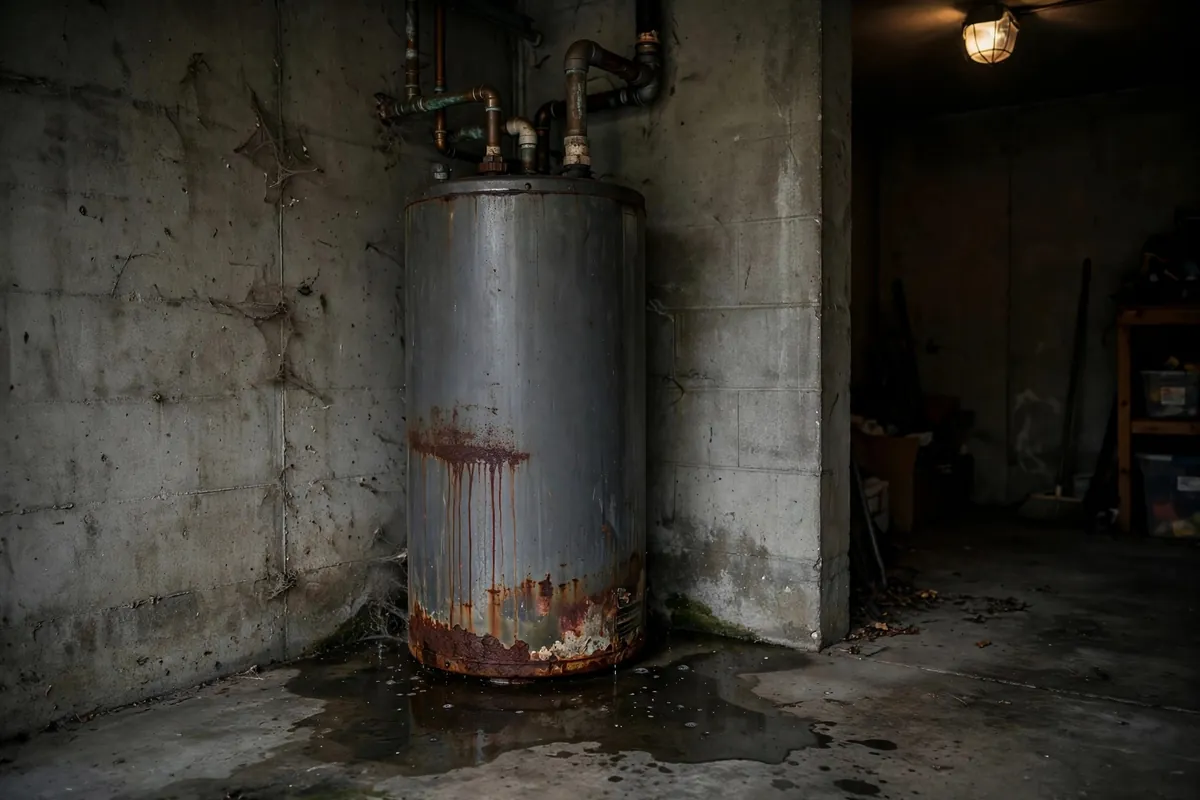
- A puddle or damp ring at the base that comes back after you mop it — the most common first sign
- Rust streaks or corrosion on the tank body, the fittings, or down the side from a joint
- A relief valve that drips steadily or leaves a wet trail down the drain line
- Rumbling, popping or hissing from the tank as sediment and failing metal change how it heats
- Hot water that runs out faster than it used to, or arrives rusty-colored at the tap
- Moisture on the garage floor or utility-closet wall spreading outward from the unit — in the older garage setups across Farm Hill and similar postwar tracts, this is how a slow heater leak quietly rots framing for months
One caution before anything else: find the cold-water inlet valve on top of the unit and know how to close it. If the tank lets go in earnest, that valve — plus the main shut-off — is what keeps a failed heater a plumbing bill instead of a flooring claim. If water is already spreading, treat it as the emergency call it is.
The Moisture Test
Not sure the puddle is the heater? Dry the floor completely, lay a paper towel at the base, and check it in a few hours. A damp towel localizes the drip better than a guess. Then look up, not just down: half the "tank leaks" we inspect are actually a fitting or valve above, dripping down the side and pooling at the bottom — a much cheaper story.
Where Water Heaters Leak From — and What Each Source Means
The repair conversation is decided by one thing: where the water is actually coming from. There are five sources, and they split cleanly into "fix it" and "replace it."
T&P Relief Valve
The safety valve on the side or top. A drip here is either a tired valve — a replaceable part — or a warning that system pressure is running high, which gets tested before the part is swapped.
Drain Valve
The spigot near the bottom often weeps after years of sitting shut, especially after being opened once. Usually a simple repair or replacement of the valve itself.
Inlet and Outlet Fittings
The connections on top corrode and loosen with age and heat cycling. Water from a fitting runs down the tank and impersonates a tank failure — this is the leak you most want diagnosed before replaced.
Supply Lines
The flexible connectors above the unit fatigue and pinhole. Same story: water appears at the base, the tank is innocent, the fix is modest.
The Tank Body
Water seeping through the tank wall or base seam means the steel has corroded through from the inside. There is no repair for this one — the tank is done, and the only decisions are size, type and timing.
Repair or Replace? The Honest Math
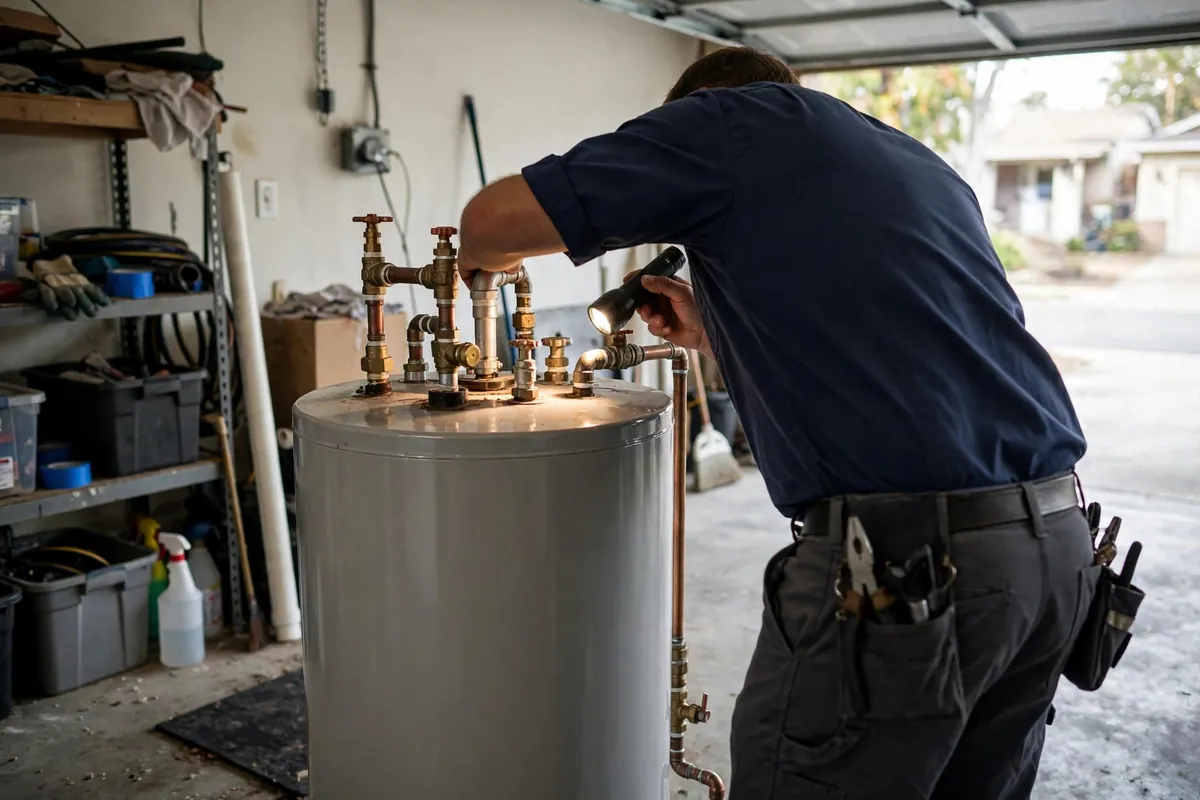
Replace only when the tank itself has failed — a leaking valve, fitting or supply line on a sound tank is a repair, full stop. That is the same find-it-first standard we apply to every leak call we run, and it is why the diagnosis comes before the quote.
When the tank body is the source, replacement is the answer, and it comes with paperwork homeowners sometimes forget: water heater replacements in Redwood City require a permit through the City's Building Division at 1017 Middlefield Road, and the finished installation is inspected — seismic strapping, venting and the relief-valve discharge line all have to be to code. Across Peninsula cities, those standard permits typically run about $150–$250. When we handle a replacement, the permit and inspection are arranged as part of the job, the new unit is quoted in a written range by size and fuel type before anything is ordered, and the old tank is hauled away. If your heater turns out to be a supply-line problem instead — the leak that is not the heater's at all — that belongs to our hidden leak tracing work, and we will say so on the spot rather than sell you a tank.
While You Are Looking at the Heater
Three quick checks any homeowner can do in five minutes, once a year:
- Look at the base and the pan — any moisture, rust trails or mineral crust?
- Test that the cold-water shut-off valve above the unit actually turns.
- Note the unit's age from the label — an older tank that starts weeping at fittings is giving you scheduling notice, not an emergency. Use it: a planned replacement is calmer and cheaper than a flooded one.
Related Services
Emergency Leak Repair
Tank ruptured and the garage is flooding? Stop the water first, day or night.
Learn more →Water Leak Detection
When the water is coming from a line, not the heater — traced and pinpointed.
Learn more →Water Heater Leak Questions
Is a leaking water heater dangerous?
It deserves prompt attention rather than panic. Turn off the water supply to the unit at its cold-water inlet valve, and if it is a gas unit and you smell gas or see scorching, leave it alone and call. The real risks are a tank that fails all at once and floods the space, and water reaching electrical components. A leak at the tank body will not heal — it only grows — so a leaking heater is a same-week problem, not a someday problem.
Can a leaking water heater be repaired, or does it always need replacing?
It depends entirely on where the water is coming from. Leaks at the temperature-and-pressure relief valve, the drain valve, or the inlet and outlet fittings are repairs — those parts are replaceable and the tank itself may be perfectly sound. Water weeping from the tank body or the base seam is different: the steel has corroded through, there is no patch for it, and replacement is the only honest answer. Finding the true source first is the whole game, and it is a standard detection visit.
Do I need a permit to replace a water heater in Redwood City?
Yes. Water heater replacements in Redwood City are permitted through the City's Building Division at 1017 Middlefield Road, and the installation gets inspected — seismic strapping, venting and the relief-valve drain all have to be right. Across Peninsula cities, standard water-heater permits typically run about $150–$250. When we replace a unit, the permit and inspection are part of the job, not an errand left for you.
Why does my relief valve keep dripping?
The temperature-and-pressure valve opens when pressure or temperature inside the tank climbs too high — so a dripping valve is either a valve that is worn out and weeping, or a messenger reporting a real pressure problem in the system, such as a failed pressure regulator or a missing expansion tank. Replacing the valve without checking which story is true can silence the messenger while the pressure problem keeps working on your pipes and fixtures. We test the pressure before we swap the part.
How much does it cost to fix a leaking water heater?
Finding the source is a standard detection visit — a basic inspection typically runs $100–$300. From there, a valve or fitting repair is a modest job, while a full replacement is quoted in a written range based on the unit's size, fuel type and venting, with the permit included in the conversation up front. You approve the number before any work begins, and there is no charge-to-look surprise at the end.
How long does a water heater replacement take?
Once the new unit is on site, most straightforward replacements are completed the same visit — drain the old tank, set and connect the new one, strap and vent it to code, and confirm hot water before we leave. The permit inspection is scheduled through the City afterward. If your current heater is leaking but still heating, tell us when you call; sequencing the replacement before it fails completely is the calm version of this job.
The water under my heater — how do I know if it is the tank itself?
Start by looking at where the water is coming from. Puddles fed by the relief valve pipe, the drain valve, or the inlet and outlet fittings on top are often fitting problems, and fittings can be repaired. Water weeping from the tank body or seams, rust streaks down the side, or corrosion at the base point the other way — a tank that is leaking through its steel cannot be patched, and replacement is the real conversation. Drying the floor and checking again in an hour usually shows which one you have.
What should I do right away if my water heater is leaking?
Stop the water first: turn the cold-water valve on top of the heater clockwise until it closes. Then cut the energy — the gas control knob to off on a gas unit, or the breaker on an electric one — especially if water is anywhere near wiring or the burner. Move anything stored nearby out of the puddle, and take a photo of where the water is coming from before it dries; that picture helps whoever looks at it next, and it documents the moment for any insurance conversation.
Puddle at the Tank? Find Out Which Story It Is.
One visit identifies the true source — a replaceable valve, a tired fitting, or a tank at the end of its life — and puts the honest number in front of you before you decide.
Call (650) 632-9185 Request a Quote